

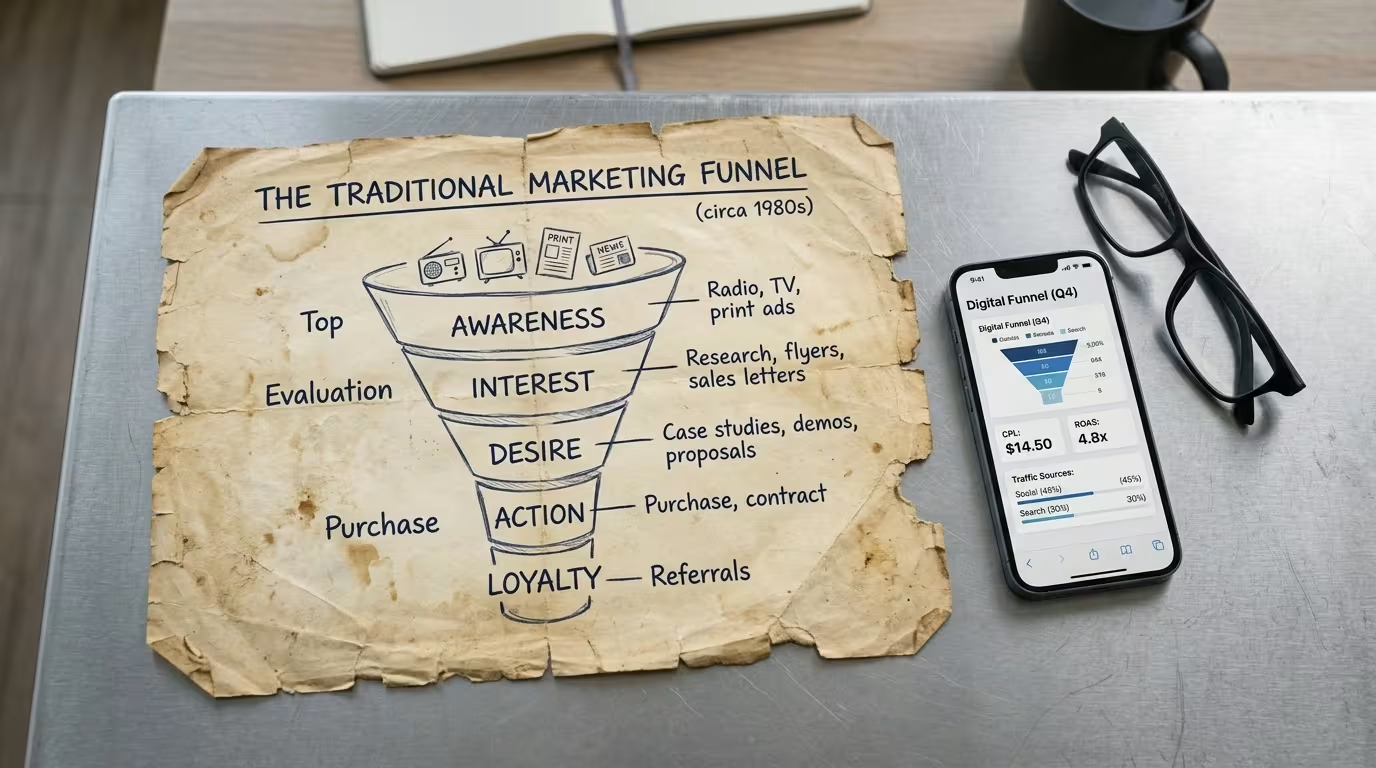
The marketing funnel was invented in 1898. It assumed awareness led to interest, interest to desire, and desire to action — in a straight line, at a predictable pace. That model worked when brands controlled the information and buyers had limited choices.
Neither of those things is true anymore.
Today’s enterprise buyer has completed 70% of their decision-making process before they speak to a salesperson. They’ve read your case studies, compared your competitors, watched your founder’s LinkedIn posts, and probably already formed an opinion. The funnel doesn’t capture this. It never did.
What’s replacing it: the revenue system
A revenue system isn’t a metaphor — it’s an architectural decision. Instead of moving buyers through stages, it creates conditions for buyers to self-qualify and accelerate toward a decision through every interaction they have with your brand.
The components are:
- Intelligent demand capture — multi-channel signals mapped to buyer intent, not just ad clicks
- Behavioural scoring — AI models that rank leads by predicted revenue value, not just form fills
- Automated nurture architecture — personalised content sequences that adapt based on engagement, not just time-based drips
- Conversion infrastructure — landing environments built to reduce friction at the specific decision stage each prospect is in
These components don’t run sequentially. They run simultaneously, reinforcing each other. That compounding effect is what makes them a system rather than a process.
Why the funnel persists
Most marketing teams still think in funnels because their reporting tools do. Campaign dashboards show impressions → clicks → leads → closes. That linear view creates a linear mental model.
But the data tells a different story. In our work across 200+ enterprise clients, the highest-converting campaigns rarely follow a single attribution path. A buyer might see a LinkedIn ad, read a case study three weeks later, get a targeted email sequence, and then book a call after watching a webinar — with no single touchpoint being decisive.
Funnel thinking assigns credit to one of these. Revenue system thinking asks: how do we optimise the entire environment so the buyer always has the right next interaction available?
What this means in practice
Making this shift doesn’t require rebuilding your entire go-to-market. It starts with two changes:
First, move your success metric from “leads generated” to “revenue pipeline created.” This forces your team to think in terms of buyer outcomes, not marketing activities.
Second, audit every touchpoint in your buyer journey — not for conversion rate in isolation, but for how well it prepares the buyer for the next decision. A touchpoint that converts 2% but leaves buyers confused about the value proposition is more damaging than one that converts 0.5% but creates a strong, high-intent handoff to sales.
The funnel isn’t dead because the buyer journey changed. It’s dead because buyers are more informed, more impatient, and more demanding than the model was ever designed to handle.
The agencies and teams building revenue systems — not funnels — are the ones compounding growth. The rest are optimising a leaking bucket.